
Phone/SMS: (321) 203-0550
Expert Thermography Services
for Commercial Building Recertification
in Miami & Palm Beach
Thermography Deficiencies Found?
What to Do After an Electrical Thermal Anomaly
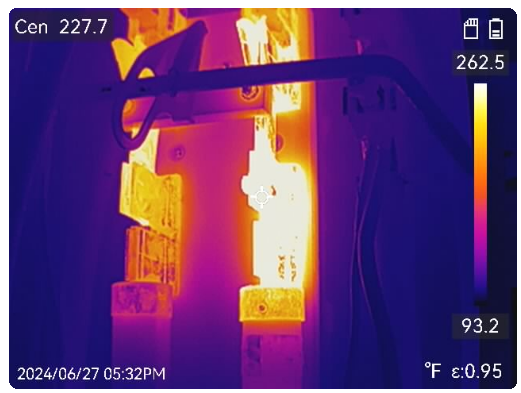
A thermographic inspection can identify electrical overheating conditions that are not visible during a standard visual inspection. When a thermal anomaly is found, it may indicate a loose connection, overloaded circuit, failing component, unbalanced electrical load, or another condition that requires evaluation by a licensed electrical contractor.
If your thermography report identifies a Level 1 – Critical / Major Discrepancy, the item should be evaluated and repaired immediately. Elevated electrical temperatures can present a potential fire and safety hazard, especially when the condition involves energized equipment, service panels, switchgear, breakers, conductors, or major electrical distribution components. The affected circuit may need to be shut off or taken out of service until corrected by a licensed electrical contractor
Before submitting the report to the city for recertification, we strongly recommend having the deficiency corrected by a licensed electrical contractor. Unresolved thermal deficiencies may trigger additional scrutiny, delays, or requests for clarification during the recertification review process.
Common Causes of Electrical Thermal Anomalies
Thermal anomalies or overheating are commonly associated with one or more of the following conditions:
Loose electrical connections
Corroded terminals or conductors
Overloaded breakers or circuits
Unbalanced electrical loads
Improper wiring
Undersized conductors
Aging or deteriorated electrical components
Limited ventilation around electrical equipment
Nearby heat sources affecting the reading
Equipment operating under abnormal load conditions
A thermography inspection helps identify the abnormal heat pattern, but the repair should be performed by a licensed electrician who can evaluate the electrical system directly.
What the Electrician Should Check Before Reinspection
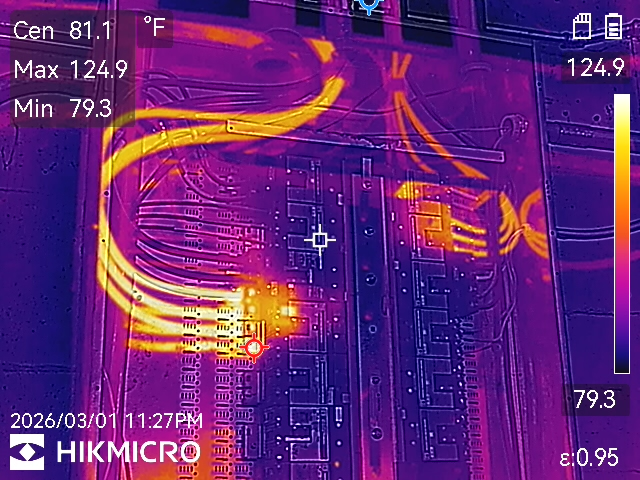
Before scheduling a thermography reinspection, the electrician should verify that the issue has been properly corrected. This may include checking:
Amp loads on the affected equipment
Conductor sizing
Breaker sizing
Tightness of all terminations
Condition of conductors and insulation
Phase balance
Load distribution
Corrosion or damaged components
Proper ventilation
Post-repair temperature readings
The electrician should also perform post-repair spot checks using an infrared thermometer (search online for thermal gun thermometer) to confirm that the corrected component is operating within an acceptable temperature range.
As a general guideline, electrical components should not exceed approximately 18°F above ambient temperature under normal operating conditions. However, final evaluation depends on the equipment type, load conditions, and professional judgment.
check on line: Thermometer Gun
Why Repairs Should Be Completed Before City Submission
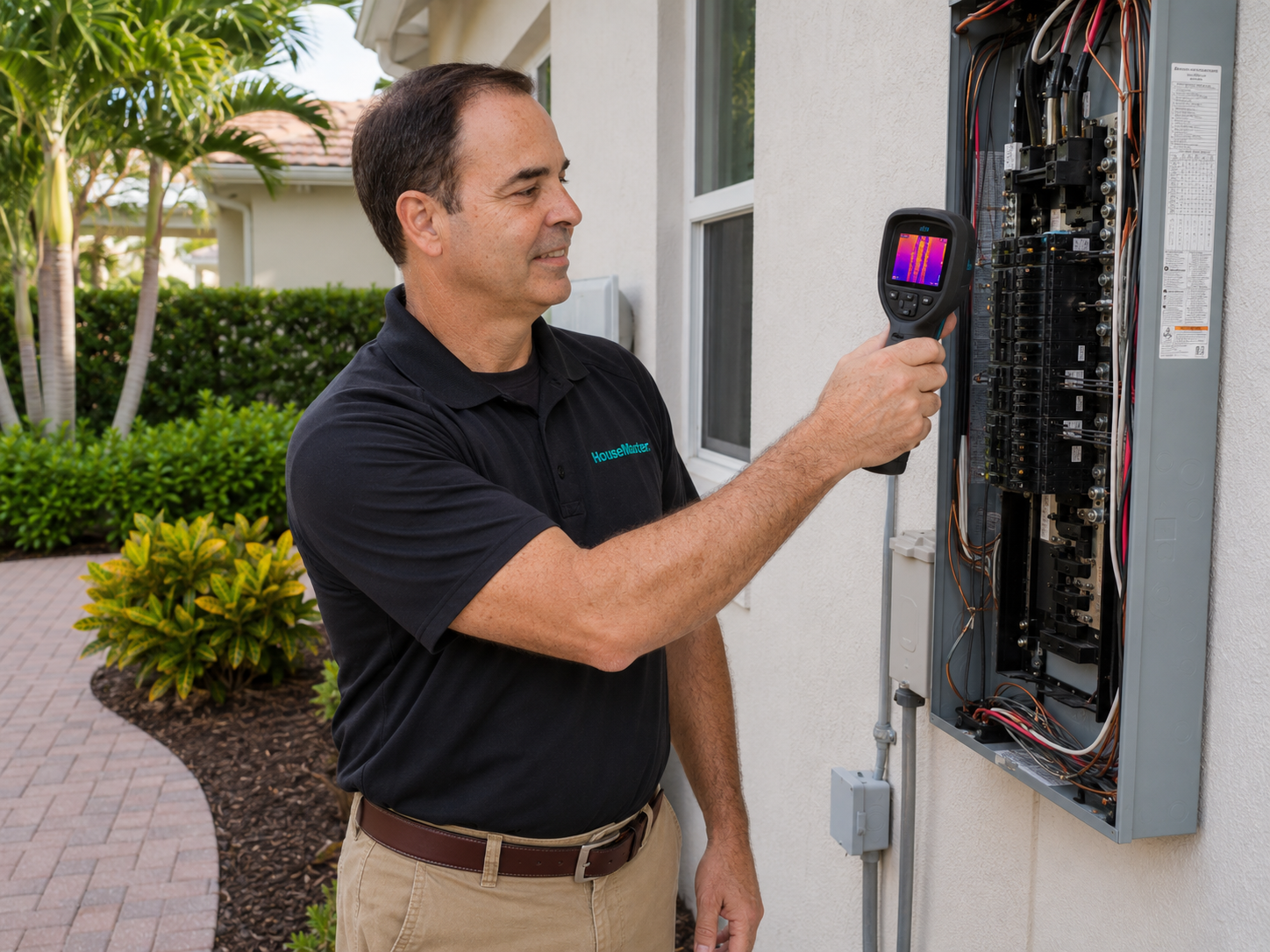
If a report is submitted with unresolved thermal deficiencies, the city, engineer, or reviewing authority may request clarification, repairs, additional documentation, permits for the required repairs, or a reinspection. This can delay the recertification process and create additional costs for the property owner, condominium association, or building manager. Correcting the issue before submission helps reduce risk, improve documentation, and support a smoother recertification review.
Reinspection After Electrical Repairs
Once repairs are completed, please contact us to schedule a limited thermography reinspection.
If corrections are completed within 60 days, we can usually perform a limited reinspection to update the existing report for a smaller fee. This allows us to verify the corrected item and provide updated documentation. After 60 days, a new full inspection may be required at the standard fee because building load conditions, electrical usage, and system performance may have changed.
Reports submitted to the city are generally considered invalid after 180 days, so repairs and resubmission should be handled as soon as possible.
Recommended Customer Instructions
If your report identified a thermal deficiency, we recommend the following steps:
1. Send the thermography report to a licensed electrical contractor.
2. Ask the electrician to evaluate the specific item listed in the report.
3. Complete the required repair.
4. Have the electrician verify amp load, conductor sizing, terminations, and post-repair temperatures.
5. Ask the electrician to test the repaired component using a handheld infrared thermometer to confirm temperatures have returned to an acceptable range. See above the link for the tool
6. Contact us to schedule a reinspection.
7. Submit the updated report package to the city, engineer, or reviewing authority.
Need a Reinspection After Electrical Repairs?
If your thermography report identified overheating, a thermal anomaly, or a critical electrical deficiency, contact us once the licensed electrician has completed the repair. We can review the original finding, confirm the reinspection scope, and help determine whether a limited reinspection or full new inspection is required.
Call us to schedule your thermography reinspection or request guidance before submitting your report for recertification.

Phone/SMS: (321) 203-0550
CPFM Enterprises LLC, Owner Cesar Costa
6115 Stirling Road, suite 211. Davie, FL 33314
Frequently Asked Questions
Lorem ipsum dolor sit amet, consectetur ?
Lorem ipsum dolor sit amet, consectetur adipisicing elit. Autem dolore, alias, numquam enim ab voluptate id quam harum ducimus cupiditate similique quisquam et deserunt, recusandae.
Lorem ipsum dolor sit amet, consectetur adipiscing elit?
Lorem ipsum dolor sit amet, consectetur adipisicing elit. Autem dolore, alias, numquam enim ab voluptate id quam harum ducimus cupiditate similique quisquam et deserunt, recusandae.
Lorem ipsum dolor sit amet, consectetur adipiscing elit. Etiam sollicitudin?
Lorem ipsum dolor sit amet, consectetur adipisicing elit. Autem dolore, alias, numquam enim ab voluptate id quam harum ducimus cupiditate similique quisquam et deserunt, recusandae.