
Expert Thermography Services
for Commercial Building Recertification
in Miami & Palm Beach
Thermal Drone Inspections
Thermal Drone Inspections
See What Conventional Aerial Photography Can't.
Professional drone thermography for commercial roofs,
solar systems, buildings and
industrial assets across South Florida.
Thermal images are only as useful as the person interpreting them. Our inspections combine professional aerial infrared equipment with analysis and reporting by Level II Certified Thermographers, FAA Part 107 drone pilots and engineering-background leadership.
Local Team
Level II Thermographers
FAA Part 107
Professional Equipment
Competitive Pricing
Not Every Thermal Drone Inspection Is the Same
It is not simply about capturing a thermal image. It is about interpreting what that image means.
Accurate thermographic analysis requires an understanding of thermal patterns, environmental conditions, reflections, emissivity, solar loading, distance, roof construction, equipment operating conditions, and the limitations of infrared technology.
At Thermography Experts, the drone is the data-collection platform. The analysis is performed by a Level II Certified Thermographer who evaluates the thermal patterns in context and translates the findings into meaningful, actionable information.

A thermal image may reveal an apparent temperature difference, but determining whether that pattern represents moisture, heat loss, an electrical anomaly, a material condition, or simply an environmental influence requires trained interpretation.
Thermal Drone Roof Inspections
Find the pattern before deciding where to investigate.
Infrared drone thermography can rapidly survey large commercial and low-slope roofs for thermal anomalies that may be associated with:
Water intrusion
Energy-loss patterns
Previous repair areas
Areas requiring additional investigation
Insulation inconsistencies
Wet or moisture-affected insulation
Areas retaining abnormal heat

Thermal drone imaging can identify and map temperature patterns consistent with trapped moisture, helping direct follow-up investigation and targeted repairs.
This technology is especially effective for commercial and industrial flat or low-slope roofing systems, where roof construction and environmental conditions are suitable for infrared evaluation.
For roof moisture surveys, the optimal inspection window typically occurs after sufficient solar loading and after sunset, when wet and dry areas of the roof cool at different rates. Proper timing and environmental conditions are critical to producing reliable thermal data.
Solar Panel & Solar Farm Thermography
Thermal drone inspections allow large rooftop solar arrays and solar farms to be evaluated efficiently while the system is operating, helping identify abnormal temperature patterns that may indicate module or electrical performance issues.
Thermal imaging can help identify:
Underperforming or irregular modules
Disconnected modules
Diode-related anomalies
Hot spots and abnormal temperature patterns
Temperature differences between modules or strings
Areas requiring additional electrical or performance evaluation

By combining aerial thermal imaging with high-resolution visual data, large solar installations can be surveyed efficiently while helping maintenance teams focus additional investigation where it is most needed.
Our thermal data is reviewed and interpreted by a Level II Certified Thermographer, providing more than images alone—the objective is to translate thermal patterns into useful information for maintenance and further evaluation.
Solar inspections can also be performed using methodologies informed by IEC TS 62446-3, which addresses outdoor infrared thermography of operating photovoltaic modules and plants.
Wind Turbines & Infrastructure
Inspect Difficult-to-Access Assets from a Different Perspective
Drone thermography provides an efficient way to evaluate large, elevated, or difficult-to-access assets while reducing the need for lifts, scaffolding, and personnel working at height.
Combining high-resolution visual imaging and infrared thermography can help identify abnormal thermal patterns and areas that may warrant closer investigation.
Applications include:
Wind turbines
Towers and elevated structures
Utility infrastructure
Industrial facilities
Large mechanical systems
Difficult-to-access building components

The drone provides access and data collection. The thermographer provides the interpretation.
Building Envelope & Energy Loss
See Thermal Patterns That Are Difficult to Detect Visually
Aerial infrared imaging can help evaluate large building surfaces for temperature patterns associated with insulation deficiencies, thermal bridging, air leakage, moisture intrusion, and abnormal heat loss.
This approach is particularly useful for warehouses, commercial buildings, industrial facilities, condominium buildings, and other large structures where conventional inspection methods may provide only a limited view.

When environmental conditions provide adequate thermal contrast, drone thermography can rapidly document large sections of a building envelope and help identify areas requiring additional investigation.
How It Works
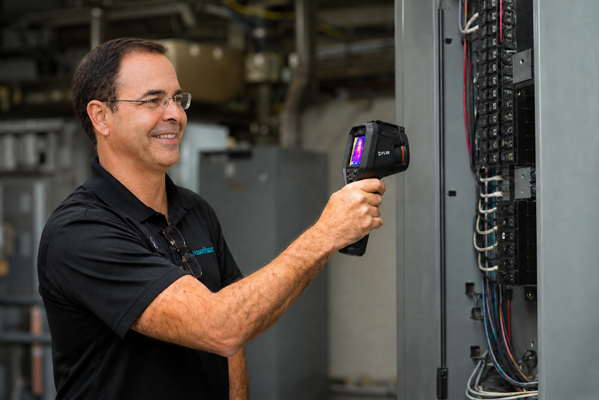
1. Plan: We review the inspection objective, site conditions, timing, and flight requirements.
2. Capture: FAA Part 107 pilots collect thermal and high-resolution visual imagery using professional drone equipment.
3. Analyze: A Level II Certified Thermographer reviews the thermal data and identifies relevant anomalies.
4. Report: You receive a clear digital report with annotated thermal and visual images, findings, and areas recommended for further investigation.
Local South Florida Thermography Experts
Local Service. Direct Access to the Experts Performing the Work
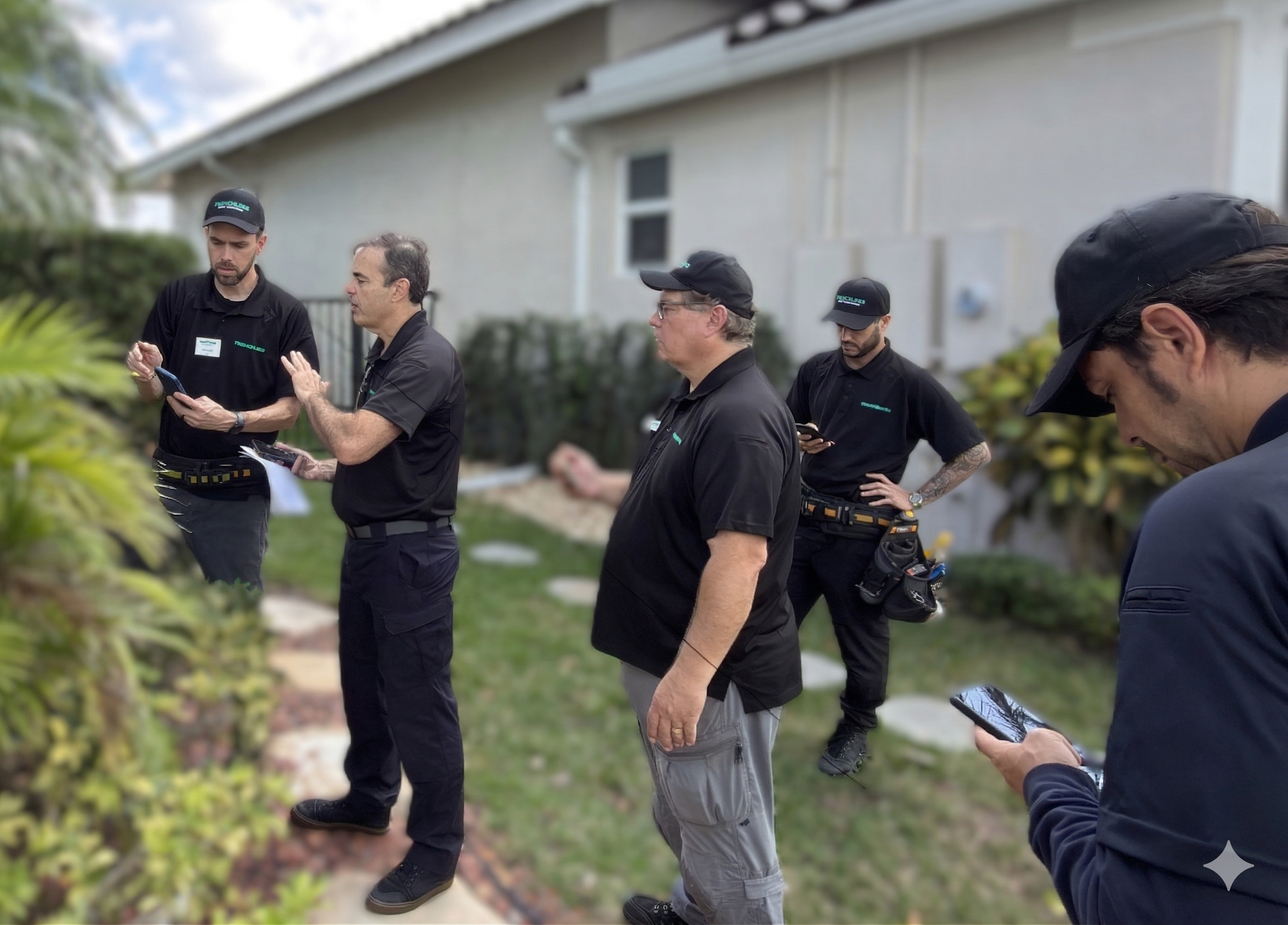
Why Clients Choose Thermography Experts:
Level II Certified Thermographers
Engineering-background leadership
FAA Part 107 drone pilots
Professional thermal imaging equipment
Local South Florida team
Miami-Dade • Broward • Palm Beach
Fast scheduling
Competitive pricing
Clear digital reporting
Direct communication with our inspection team
CLIENT TESTIMONIALS
Thermography Services in Miami and Miami Beach
Thermography Experts specializes in Level II infrared thermography inspections for building recertification in Miami and Miami Beach.
Services include electrical thermal inspections for overheating detection, moisture intrusion identification using infrared imaging, structural thermography for concrete and facade analysis, and roof thermography for water intrusion detection.
Primary clients include condominium associations, HOAs, commercial buildings, and property managers across South Florida.
Frequently Asked Questions
Lorem ipsum dolor sit amet, consectetur ?
Lorem ipsum dolor sit amet, consectetur adipisicing elit. Autem dolore, alias, numquam enim ab voluptate id quam harum ducimus cupiditate similique quisquam et deserunt, recusandae.
Lorem ipsum dolor sit amet, consectetur adipiscing elit?
Lorem ipsum dolor sit amet, consectetur adipisicing elit. Autem dolore, alias, numquam enim ab voluptate id quam harum ducimus cupiditate similique quisquam et deserunt, recusandae.
Lorem ipsum dolor sit amet, consectetur adipiscing elit. Etiam sollicitudin?
Lorem ipsum dolor sit amet, consectetur adipisicing elit. Autem dolore, alias, numquam enim ab voluptate id quam harum ducimus cupiditate similique quisquam et deserunt, recusandae.

Phone/SMS: (321) 203-0550
CPFM Enterprises LLC, Owner Cesar Costa
6115 Stirling Road, suite 211. Davie, FL 33314